How Cross-Border Banking Rules Shape Access to Initial Reel Credits in Smartphone Gaming Apps
Willa Braun · Aug 26, 2026

How Cross-Border Banking Rules Shape Access to Initial Reel Credits in Smartphone Gaming Apps
Cross-border banking regulations create layered requirements for payment processors that handle initial reel credits in smartphone gaming applications, and these rules determine how quickly users in different jurisdictions can receive starting balances after registration. Financial institutions must comply with anti-money laundering frameworks established by the Financial Action Task Force, which sets standards adopted across more than 200 jurisdictions and directly influences the verification processes gaming platforms apply before releasing any credits. Payment service providers operating across borders incorporate customer due diligence checks that often involve multiple data points, including address verification and source of funds documentation. In the European Union, the revised Payment Services Directive requires strong customer authentication for transactions above certain thresholds, which affects how mobile apps process deposits that unlock initial reel credits. Platforms respond by integrating local payment rails where available, yet users in countries with stricter capital controls encounter additional delays when funds cross multiple regulatory zones.Regional Variations in Compliance Requirements
Observers note that rules differ sharply between major markets. The Monetary Authority of Singapore applies licensing conditions on digital payment services that include specific reporting on gaming-related transfers, while the Australian Transaction Reports and Analysis Centre mandates threshold transaction reporting for any cross-border movement tied to interactive entertainment platforms. These requirements mean that an app available globally must segment its onboarding flows according to the user's location and the banking partners supporting that region.
Data compiled by the European Banking Authority shows that authentication friction increases when transactions involve non-EU payment accounts, leading some developers to partner exclusively with licensed local acquirers. In North America, state-level money transmitter laws add another layer, requiring separate registrations in each jurisdiction where credits are distributed. Users therefore experience inconsistent access times depending on whether their bank operates under unified federal oversight or fragmented state rules.
Impact on Initial Credit Distribution Mechanisms
Initial reel credits function as entry-level balances granted upon first deposit or account creation, and their availability hinges on successful settlement through regulated channels. When banks apply enhanced due diligence to gaming transactions, settlement can extend from hours to several business days. Applications mitigate this by offering alternative funding methods such as prepaid vouchers or regional e-wallets that bypass certain international transfer scrutiny.
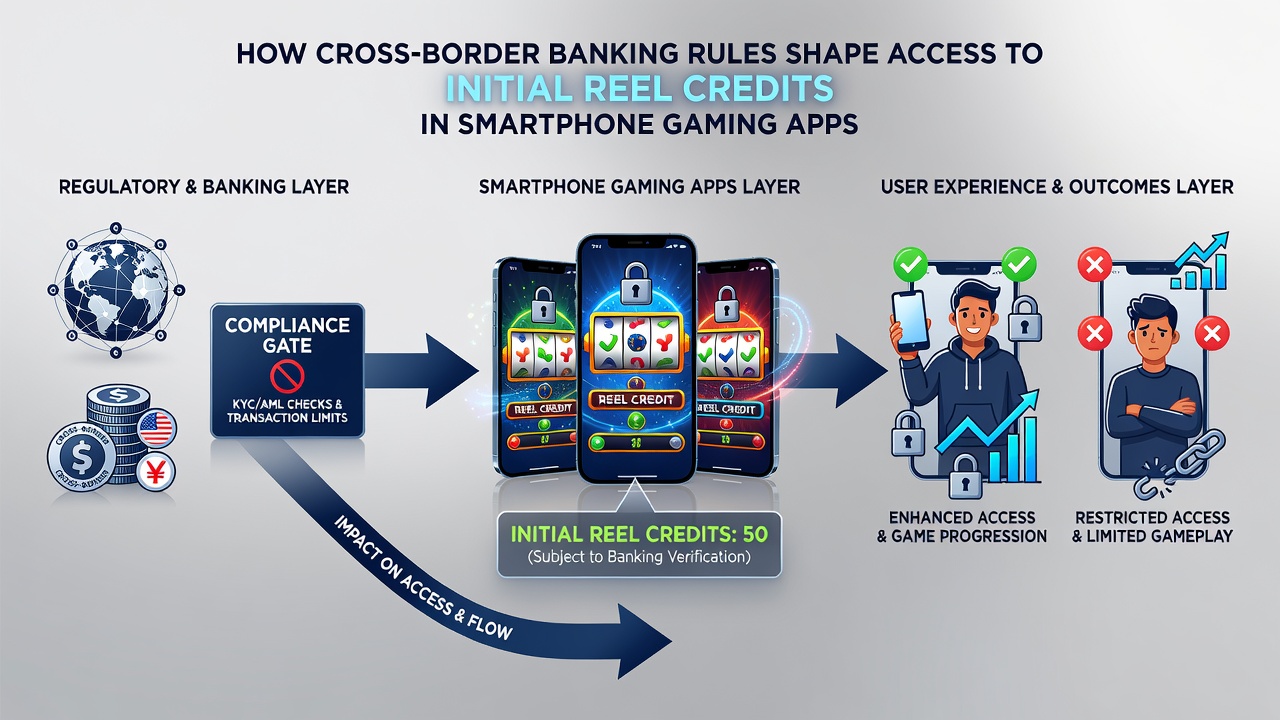
Research from payment industry reports indicates that adoption of open banking interfaces, which gained momentum after 2023, has allowed some platforms to reduce verification steps in supported markets. However, jurisdictions without standardized APIs continue to rely on manual reviews that slow credit activation. August 2026 marks the scheduled implementation date for updated FATF guidance on virtual asset service providers, which analysts expect will extend similar scrutiny to certain gaming-related payment flows that previously operated under lighter oversight.
Technical Adaptations by Application Developers
Developers adjust their systems to route transactions through compliant corridors, often maintaining separate ledgers for each regulatory environment. One common approach involves geo-fencing deposit options so that only approved methods appear to users in high-scrutiny regions. This segmentation ensures that initial reel credits are issued only after the chosen payment method completes its required compliance checks.
Industry associations tracking mobile entertainment have documented cases where platforms temporarily suspended credit offers in specific countries following changes in banking partner policies. Such adjustments occur when a processor exits a market due to rising compliance costs, forcing the app to seek new partners and rebuild integration pathways before resuming credit distribution.
Conclusion
Cross-border banking rules continue to define the operational boundaries within which smartphone gaming applications deliver initial reel credits. Compliance frameworks established by international bodies and implemented through national regulators determine processing speed, available payment methods, and geographic reach. As standards evolve, platforms maintain ongoing adjustments to their funding infrastructure, while users encounter varying access conditions based on their location and chosen financial institutions. These dynamics reflect the intersection of financial regulation and digital entertainment distribution rather than any single policy decision.